Showing posts with label realistic fiction. Show all posts

Wednesday, December 7, 2016

We Belong Together by Todd Parr

We Belong Together

Author/Illustrator: Todd Parr
Genre: Realistic Fiction

Awards: N/A
Grade Level: PK-1

This book is about what adoption is, why it happens, and who it happens to. The author keeps a positive tone and describes the matter in an appropriate way for even the youngest readers.

The illustrations are very colorful and made to look like a child's drawing.

Students can talk about diversity among families. Teachers can use this book to celebrate differences in students and promote an encouraging environment.

I Ain't Gonna Paint No More by Karen Beaumont

I Ain't Gonna Paint No More


Author: Karen Beaumont
Illustrator: David Catrow
Genre: Realistic Fiction
Awards: N/A
Grade Level: 1-3

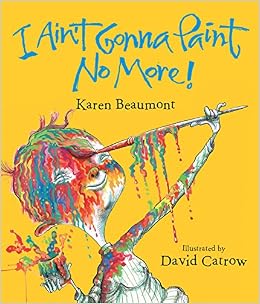
When his mother tells him he cannot paint anymore, this little boy refuses to listen. He makes a huge mess with his paint as he slowly covers each part of his body.

As the boy becomes covered with paint more and more, the pages get more colorful.

This story will promote creativity in the classroom. Students will be inspired by the boys enthusiasm and persistence. 

Carla's Sandwich by Debbie Herman

Carla's Sandwich


Author: Debbie Herman
Illustrator: Sheila Bailey
Genre: Realistic Fiction
Awards: N/AGrade Level: 2-5

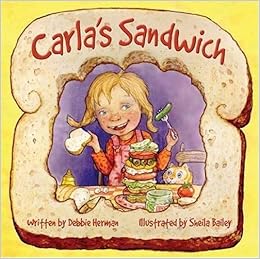
Carla always has an interesting lunch. The other kids tease her about her silly sandwiches. One day, a little boy forgot his lunch and Carla offered to share hers with him. Although he is hesitant, he tries the sandwich and loves it! All the children start to bring unique sandwiches to school.

The characters are realistic and the sandwiches are interesting and funny. Students will love to look at all the interesting items in Carla's sandwich

This book will instill values of acceptance and open-mindedness in readers. Students will reflect a "don't knock it till you try it" attitude.

Alexander and the Terrible, Horrible, No Good, Very Bad Day by Judith Viorst

Alexander and the Terrible, Horrible, No Good, Very Bad Day


Author: Judith Viorst
Illustrator: Ray Cruz

Awards: N/A
Genre: Realistic Fiction
Grade level: K-4


Alexander is having a very bad day! All day, worse and worse things keep happening to him. He contemplates moving to Australia to get away from all of his misfortune. His mother reminds him that sometimes, bad days happen, no matter where you live.

The illustrations are appealing to children, yet still represent a realistic setting.

Students can reflect on a time when they had a bad day and come up with ways to handle difficult situations.

Sunday, December 4, 2016

The Boxcar Children by Gertrude Chandler Warner

The Boxcar Children
Author: Gertrude Chandler Warner
Illustrator: L. Kate Deal
Genre: Realistic Fiction (Other Novels)
Awards: N/A
Grade Level: 1st-4th Grade

After the death of their parents, Henry, Jessie, Violet and Benny search for a place to call home. The Aldens begin their adventure by making a home in a boxcar. Henry finds work doing chores for Dr. Moore. Jessie, Violet, and Benny search for dishes and other necessities in the town dump. They take in a stray dog named Watch. When Mr. Alden holds a Field Day, Dr. Moore asks Henry to go to it. Henry wins the Free-for-all Race and shaking his grandfather's hand as he accepts the prize, but has no idea that who he is! Violet becomes sick and Henry asks Dr. Moore for help. Dr. Moore brings Violet and the other children to live at his house until Violet feels better. Mr. Moore tells Mr. Alden who the children really are! The children learn about their grandfather and learn to love him.

The few illustrations in this chapter book depict the hardships of homelessness. The black and white images show the children in their boxcar, eating scraps, and rummaging for supplies.

This story will interest readers who like mystery stories. This is part of a series, so students will have the opportunity to keep reading about characters they love. This story can also be used to show students appreciation for the things that they have.

Friday, November 25, 2016

In the Small, Small, Pond by Denise Fleming

In the Small, Small Pond

Title: In the Small, Small Pond
Author/Illustrator: Denise Fleming
Genre: Realistic Fiction
Awards: Caldecott Medal
Grade Level: K-3rd Grade

A young boy experiences nature from a frog's point of view in a small pond. He sees many different animals. He also listens to the sounds that they make. The boy learns a lot about the life of the pond animals.

The illustrations in this story are vibrant and colorful. They portray the lively lifestyle of the animals that live in the pond.


Young readers will show interest in this book due to the many different animals used and the repetition in the text. Students will be able to imagine experiencing these animals for themselves through the text and illustrations. Classes can discuss their experiences with animals as well as how each animal is different.

When Sophie Gets Angry - Really, Really Angry... by Molly Bang

When Sophie Gets Angry - Really, Really Angry...
Image result for when sophie gets angry
Author/Illustrator: Molly Bang
Genre: Realistic Fiction
Awards: Caldecott Honor
Grade level: PK-1

When Sophie's toy gets taken away from her, she gets really upset. She tries to calm down by going outside. She is comforted by her beautiful surroundings. When she returns home, everyone is excited to see her, and Sophie does not feel angry anymore. 

The illustrations in this Caldecott Honor book include Sophie's angry and destructive outbursts. The illustrator uses shape and color to display Sophie's emotion through pictures. Although simple, the illustrations are beautiful, especially in the outdoor settings.

Students can relate to Sophie's emotions, because at early ages, children often do not understand how their feeling or know how to deal with it. I like that the story shows kids a healthy way to handle their anger. Classes can discuss different ways to deal with different emotions and learn which one is best for them.

Peter's Chair by Ezra Jack Keats

Peter's Chair


Author/illustrator: Ezra Jack Keats
Genre: Realistic Fiction
Awards: N/A
Grade level: PK-1st grade

When a young boy gets a new little sister, he discovers that his parents paint all of his old furniture pink. He gets upset, but notices that his parents left one item untouched, his old chair. Because he does not want his parents to find it, he hides it! He soon discovers that he is too big for his little chair. He has a change of heart and gives the chair to his sister. He even helps his parents paint the chair pink.

The illustrations in this story are lively, colorful, and help represent the text visually.

Children can discuss their experiences with new siblings in the house. Teachers can also bring up how everyone outgrows things from their childhood.

Friday, November 4, 2016

Happy Halloween Stinky Face by Lisa McCourt

Happy Halloween Stinky Face


Author: Lisa McCourt
Illustrator: Cyd Moore
Genre: Realistic Fiction
Awards: N/A
Grade level: PreK- 2 grade

Stinky Face is very concerned about what might happen on Halloween! He asks his mother many ridiculous"what if" questions. He is scared the neighbor will accidentally drop the candy bowl and that his friends butterfly costume will actually turn into a real butterfly! Despite Stinky Face's silly worries, his mom always finds a positive solution to each problem. He begins to question his costume choice in case until his friends show up at the door. The story ends with his mother suggesting that he just go as a ghost.

The illustrator uses interesting color choices to create a fall atmosphere. A neighbors hair is blue and purple trees line the streets. He also makes an interesting choice when on one page, the orientation of the book flips so the reader has to turn the book sideways. The text is also visually appealing because it often wraps around the illustrations or emphasizes one word, for example the words "goopy oozy" looks like goop.

I found this book to be a fun story for children to read around halloween. Classes could talk about the repetition found throughout the story when the little boy begins each sentence with "But Mama, Mama!" Students can also share their opinions about whether or not they think Stinky Face's concerns are valid or not.

Thursday, October 27, 2016

Let's Meet a Police Officer by Gina Bellisario

Let's Meet a Police Officer


Author: Gina Bellisario
Illustrator: Cole Atkinson
Genre: Realistic Fiction
Awards: N/A
Grade level: PreK-1

This story provides factual and meaningful information about police officer's role in communities through real life examples and dialogue. It begins when Officer Gabby, the school resource officer visits the class to discuss how to become a police officer, what they do, and the different assignments they have. The author also writes about the different tools that officers use, like their police cars and K-9 units. The story ends with different ways that children can keep their community safe, such as wearing a seat belt and calling 9-1-1.

The illustrations provide a visual representation of the dialogue. The illustrator also includes diversity among the characters.

Students can discuss the importance of having police officers in our community. They can also compare experiences that they have had with the police. I particularly enjoyed the end because students can see what role they play in safety. I think this story would be very useful in a social studies unit about community hereos.

Thursday, October 6, 2016

Fire! Fire! Said Mrs. McGuire by Bill Martin Jr.

Fire! Fire! Said Mrs. McGuire


Author: Bill Martin Jr.
Genre: Realist Fiction
Illustrator: Richard EgielskiAwards:N/A
Grade level: pk-k


Summary:
There is a fire and the citizens don't know what to do! They contemplate a few options such as turning on the alarm, but then the fire department comes to save them.


Evaluation: Students can discuss fire safety and the purpose and role of the fire department. You can emphasize other jobs and why it is important to be productive in society. The book is especially great for younger readers because of the short length and repetition. Teachers can use this book to show students examples of rhyming because it is used on every page. 

The illustrations may not be appropriate for classroom use, as they seem to present a condescending view of women. One picture included a group of firemen staring at an overly sexualized firewoman.